AUDIOZEN AEDO
DAC
Code: 98688084
All our products are covered by Italian warranty.
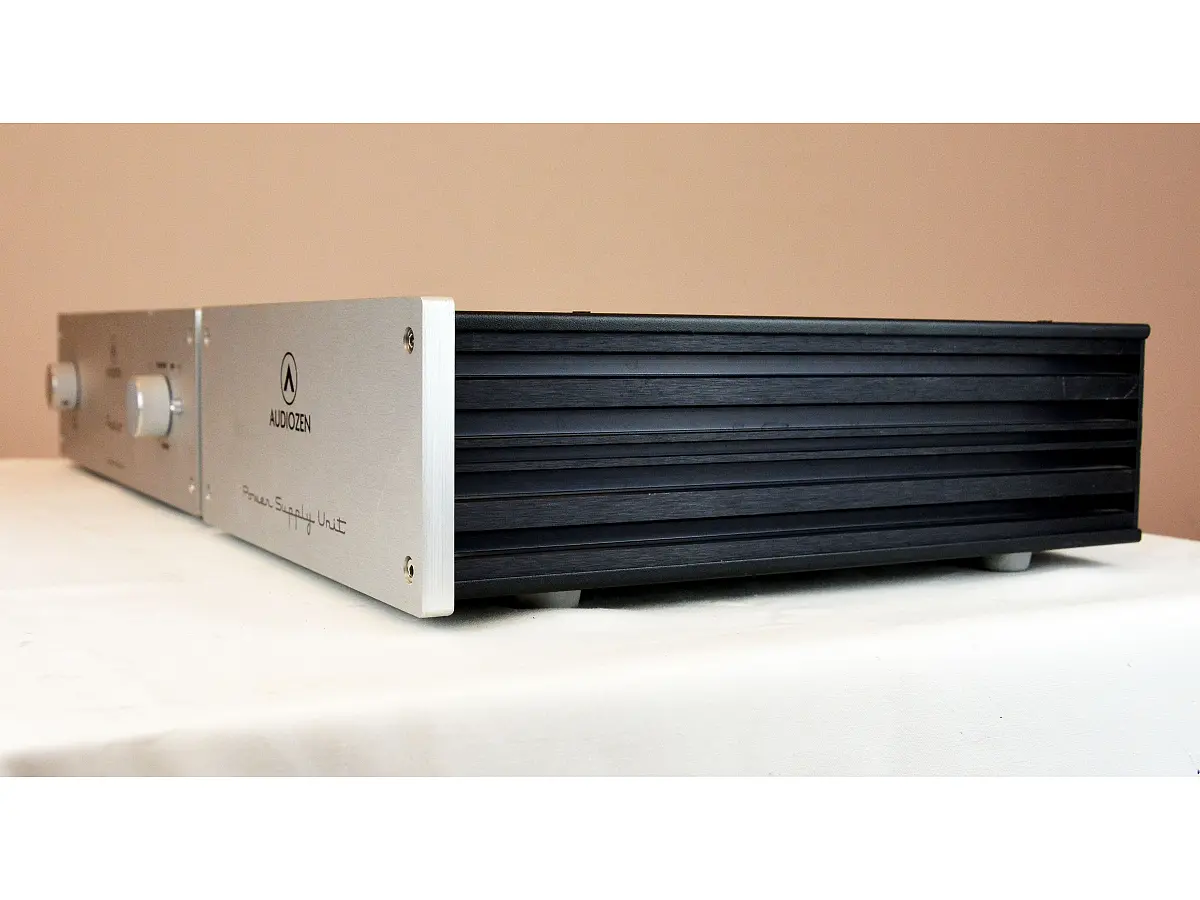
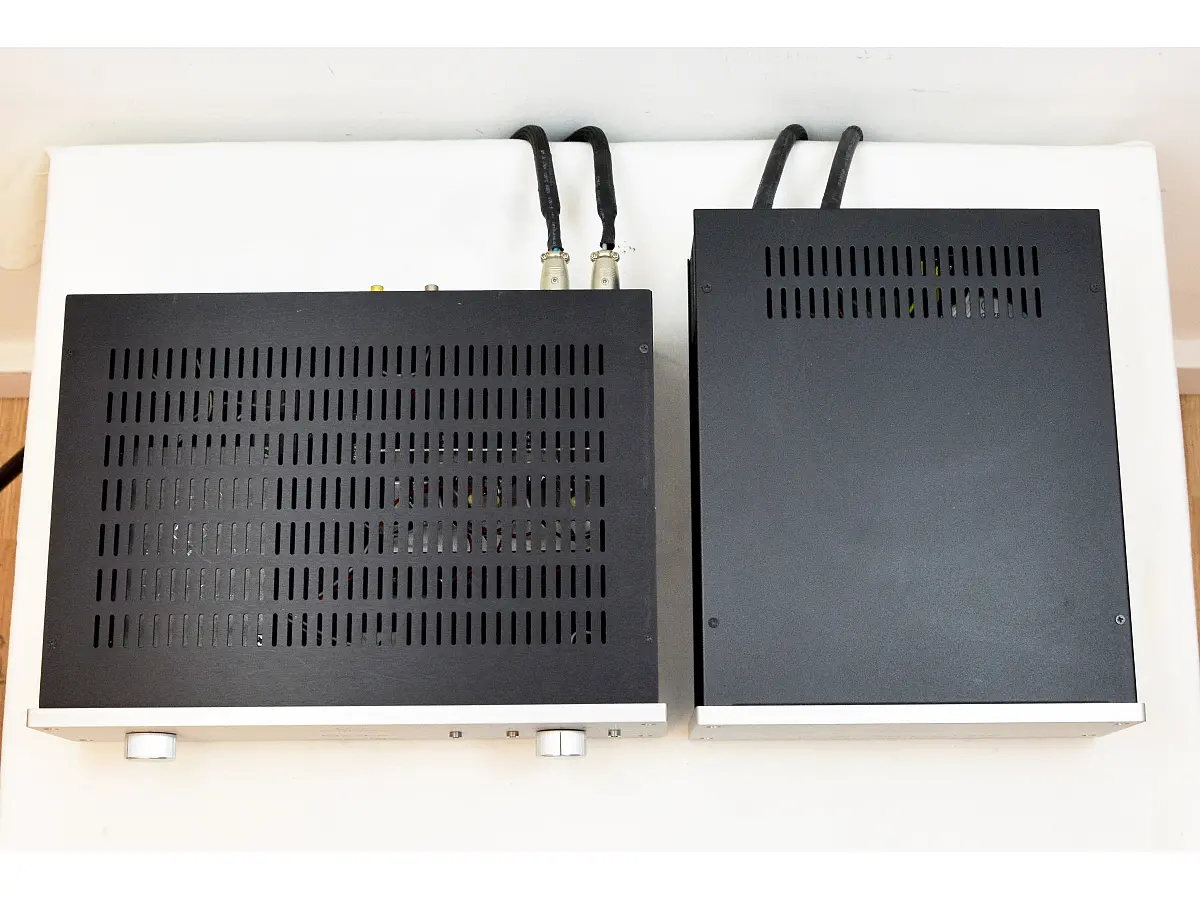
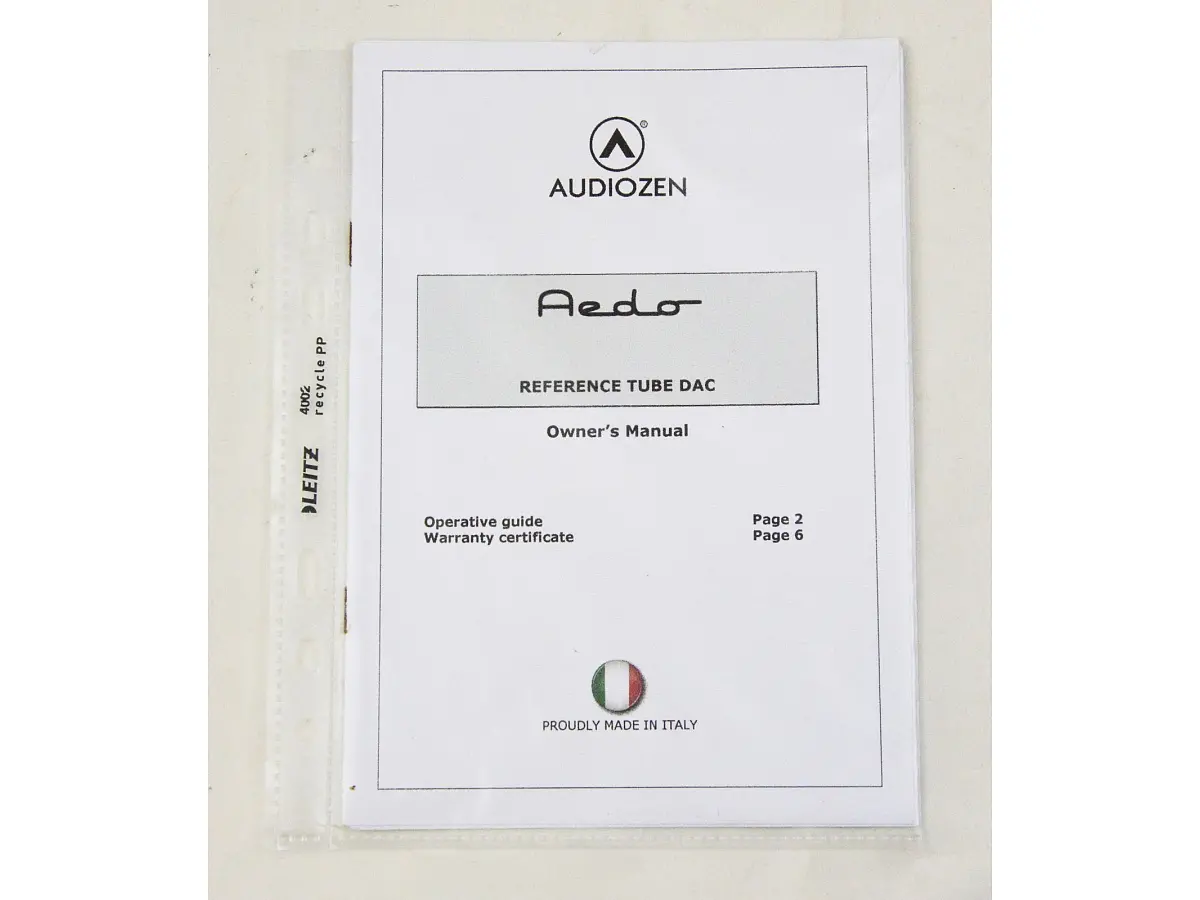
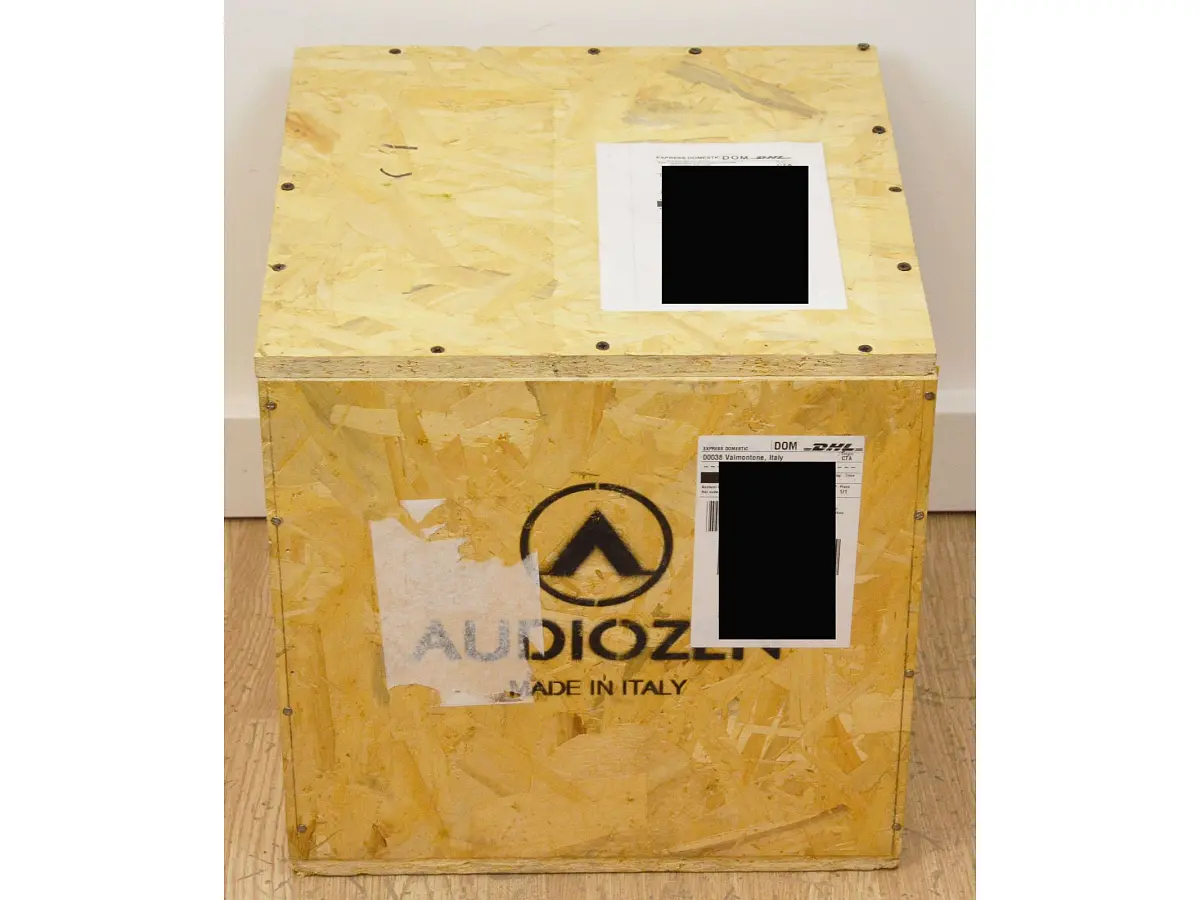
Pre owned. In good condition. Shows some signs of wear on the front-panel edges, not clearly visible in the photos. Supplied with original wooden box and manual
The Audiozen Aedo is a D/A converter from Audiozen’s Reference range, designed by the Italian company based in Catania according to a design philosophy focused on the use of tubes and minimizing signal processing. The Aedo’s design is characterized in particular by its tube output stage and non-oversampling operation, two choices that define the unit’s circuit architecture and sonic approach.
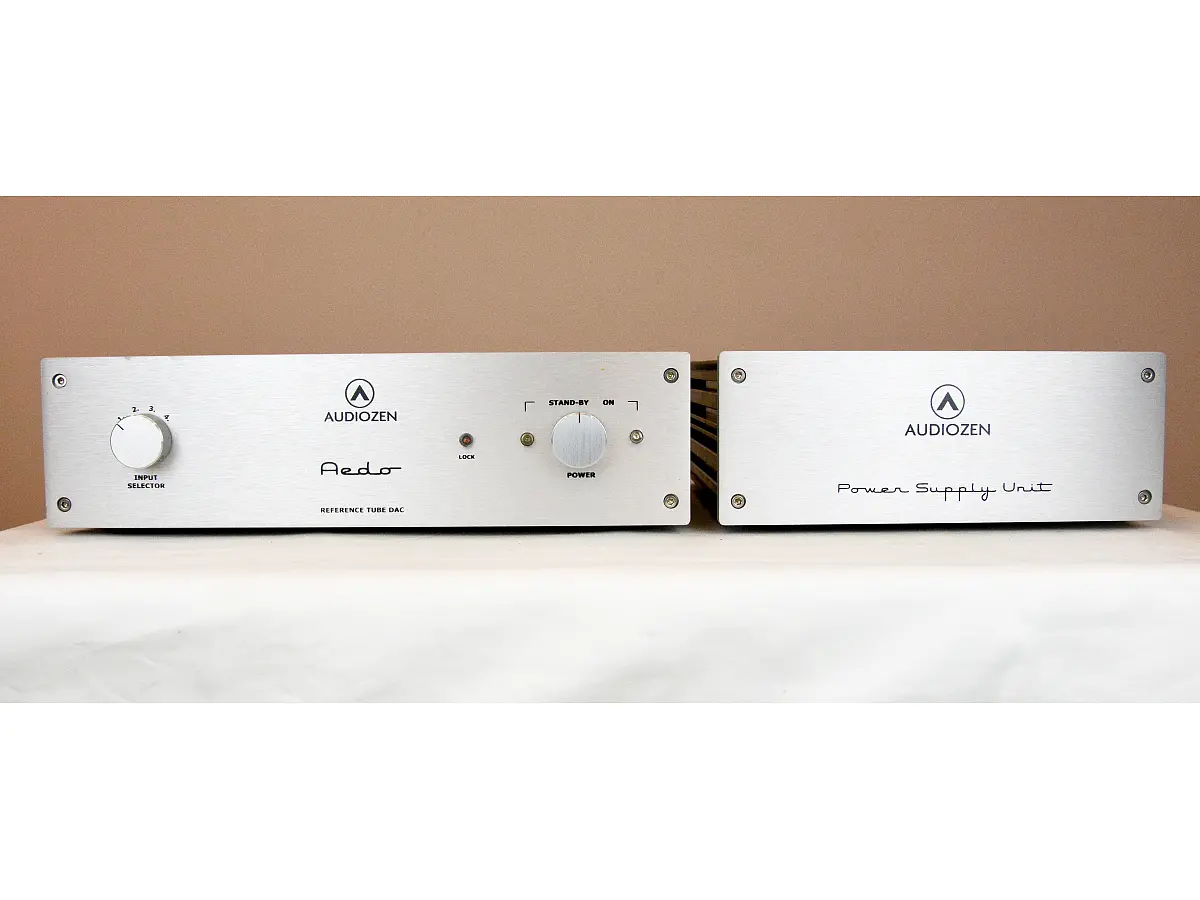
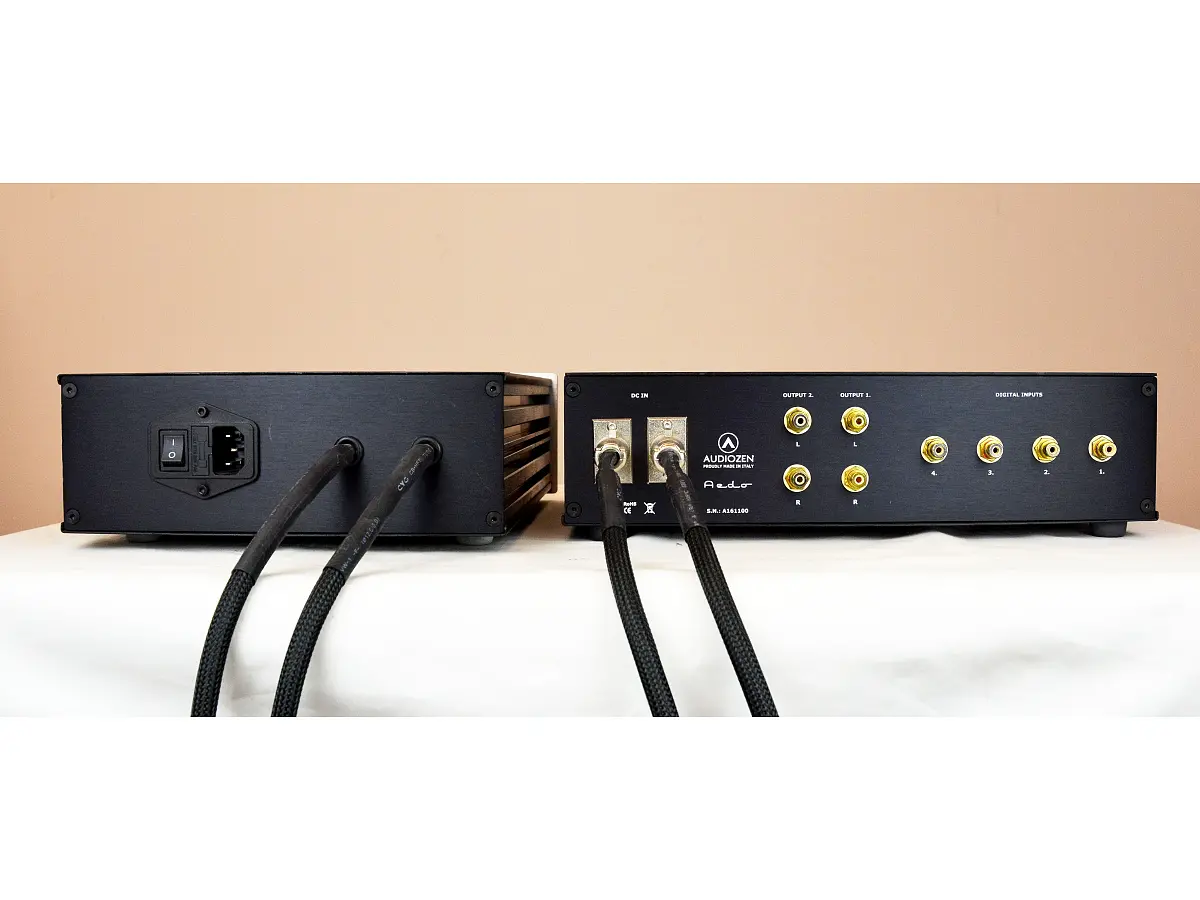
The Aedo uses a two-chassis configuration that physically separates the power supply from the audio circuits. The first chassis is dedicated exclusively to the power supply, while the second houses the digital-to-analog conversion section and output stage. The two chassis are connected by two independent cables, limiting interaction between the AC power supply and the circuits responsible for signal processing.
The power supply uses a solid-state design, chosen by Audiozen to allow generous sizing, greater consistency of performance over time and a fast response to changes in current demand. The power supply section therefore does not use tubes, which are reserved for the analog output stage.
The digital section, known as the Digital Core, operates in strict non-oversampling mode and uses a Cirrus Logic converter. The D/A chip is enclosed in an aluminum housing designed to protect it from vibrations and interference, while also providing physical shielding for the component. The architecture avoids signal oversampling and keeps the digital path free from additional processing intended for oversampling-based reconstruction.
The analog output stage is built around two dual-triode ECC82, or 12AU7, tubes used in an ICCF, Improved Cascode Cathode Follower, configuration developed by Audiozen. For each channel, one triode within the ECC82 acts as an impedance buffer, while the second contributes to circuit biasing and linearization, while also providing constant current to the output stage.
The Aedo is supplied with a pair of RFT ECC82 tubes, but the design allows the tube selection to be modified through tube rolling. Audiozen indicates RCA Cleartop tubes and NOS tubes from manufacturers such as Siemens and Mullard as possible alternatives, allowing the behavior of the analog stage to be adjusted without modifying the unit’s circuit architecture.
The passive components follow the same design philosophy. The circuit uses 1% tolerance metal-film resistors, electrolytic capacitors in the power supply section rated for operating temperatures of up to 105 °C, and Jantzen Z-Cap polypropylene output capacitors.
Connectivity is deliberately focused on the S/PDIF format. The Aedo features four digital inputs on RCA coaxial connectors and two pairs of unbalanced analog outputs; balanced versions of the latter are also available on request. The converter handles digital signals up to 24-bit/192 kHz, while it does not feature a USB input and does not support DSD signal conversion.
The absence of a USB input is part of the Aedo’s design philosophy, avoiding the direct integration of a connection intended to handle signals originating from the computer environment. For computer-based use, the USB signal can be converted externally to S/PDIF through a dedicated interface, keeping the computer-related section separate from the digital path managed by the DAC.
The controls are arranged in a straightforward manner. The power switch on the front panel features a standby mode in which the tubes remain pre-heated, while the ON position also activates the Digital Core and makes the converter fully operational. For daily use, Audiozen therefore recommends leaving the unit in standby rather than completely disconnecting the power through the main switch on the rear panel, allowing the tubes to reach their operating conditions quickly.
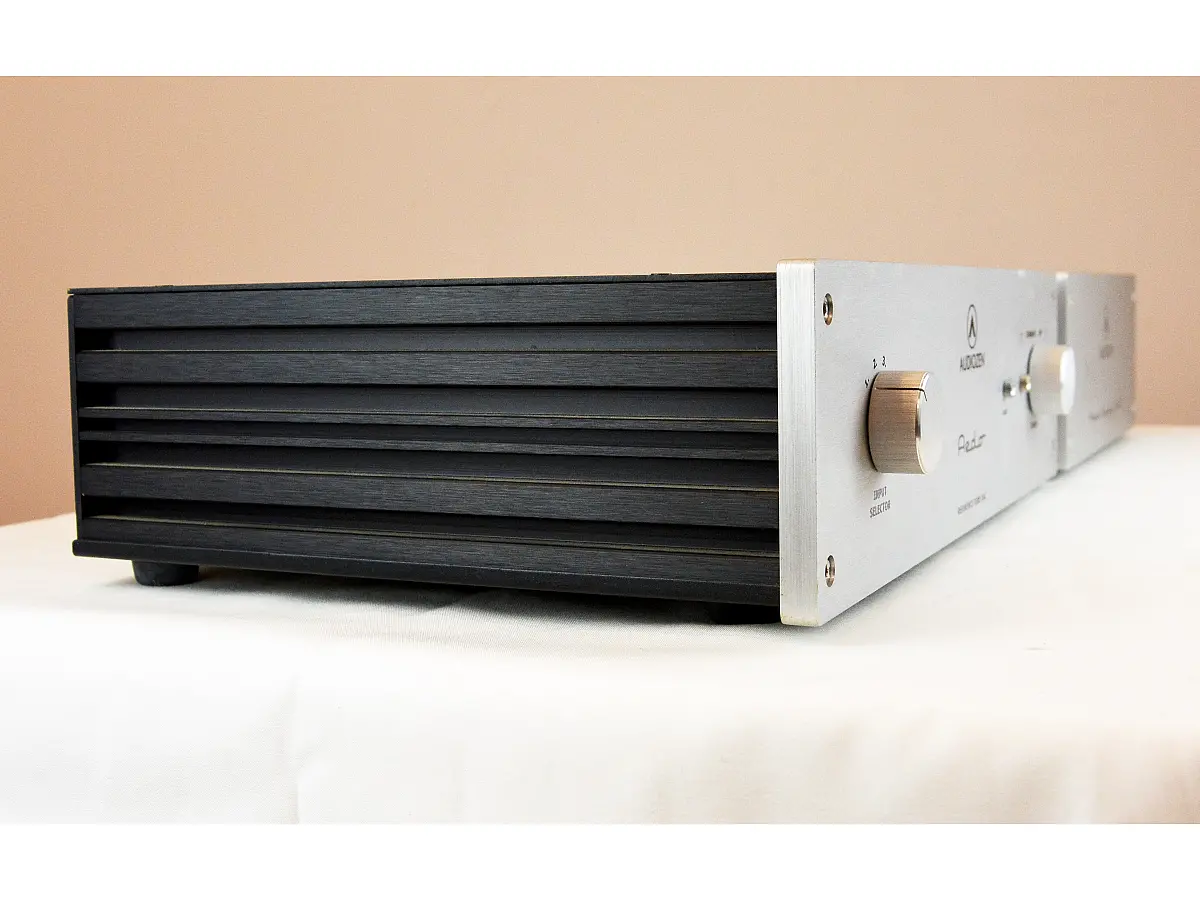
The two-chassis configuration requires appropriate placement within the system. The power supply can be positioned separately from the other electronics, while the main unit should be placed on a stable surface with sufficient space to provide the ventilation required by the tube output stage.
The Aedo’s sonic character is clearly influenced by the combination of non-oversampling conversion and a tube output stage. The midrange and upper-midrange remain well defined and articulate, avoiding an excessively soft presentation or pronounced vintage coloration. The ECC82 tubes contribute to a non-aggressive reproduction, with precise tonal rendering and a good level of detail.
The non-oversampling conversion contributes to the definition of the soundstage, with instruments positioned precisely and consistently. Each element tends to retain a distinct position within the soundstage, without relying on an especially enveloping or expanded presentation. The reproduction therefore prioritizes separation and the clear identification of individual sound sources.
With high-resolution material, dynamics remain consistent and the soundstage increases in height and depth, while preserving the tonal characteristics of the instruments. The reproduction maintains the differences between individual sound sources, avoiding an excessively homogeneous overall presentation.
The low-frequency section has a drier character than the midrange and treble. Bass tends to remain controlled and less prominent, with the response favoring definition over physical impact and macrodynamics. Its behavior can nevertheless vary significantly depending on the tubes installed in the output stage, making tube rolling a relevant part of fine-tuning the unit.
Replacing the RFT ECC82 tubes with RCA Cleartop tubes can alter the tonal balance, increasing low-frequency presence and overall body. The use of NOS tubes from different manufacturers, such as Mullard, Amperex or Telefunken, can produce further variations in the region below 100 Hz and in the reproduction of macrodynamics.
Overall, the Aedo follows a design philosophy based on limiting signal processing and using a tube output stage as a central element of the analog section. Non-oversampling operation, the absence of a USB input, the separation of the power supply into a dedicated chassis and the possibility of changing the tubes define a converter with an essential architecture focused on digital playback through S/PDIF inputs.
Technical specifications:
- DAC type: non-oversampling
- Number of chassis: 2 (power supply; main unit)
- Digital inputs: 4 × 75-ohm coaxial S/PDIF
- Maximum sampling rate: 24-bit/192 kHz
- Analog outputs: 2 pairs of RCA
- Output-stage tubes: 2 × NOS 12AU7 (ECC82)
- Frequency response: 10–95,000 Hz ±3 dB
- Digital Core THD+N: <0.002%
- Signal-to-noise ratio: 122 dB
- Output level: 2 V RMS
- Output impedance: <600 ohms
- Available finishes: silver; black
- Dimensions (W × H × D): 340 × 90 × 245 mm (main unit); 235 × 83 × 285 mm (power supply)
- Weight: 4 kg (main unit); 5 kg (power supply)
Potrebbe interessarti anche
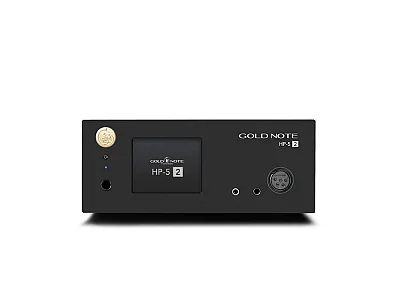
Gold Note GOLD NOTE HP-5.2
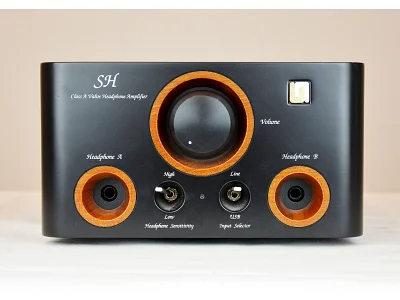
UNISON RESEARCH UNISON RESEARCH SH